What Is a Story Circle? Definition, Examples, and Community Use
What Is a Story Circle? How Narrative Arts Uses Story Circles in Community Life
For more than 30 years, Narrative Arts has used story circles as a core practice in community storytelling, cultural work, media-making, and public life.
A story circle is a facilitated group storytelling process in which people respond to a shared prompt by telling stories from lived experience and listening in turn. Story circles are used in community storytelling, public health, education, journalism, and civic dialogue to build trust, surface shared knowledge, and deepen understanding.
This page is about story circles as a community storytelling practice, not the screenwriting structure sometimes called a story circle.
What is a story circle?
A story circle is a facilitated group process built around a simple idea: people speak from lived experience, and others listen with full attention.
Participants respond to a shared prompt. They speak one at a time. They are invited to tell a story rather than make an argument. As stories accumulate, the group often begins to hear something larger than any one person’s account. Patterns, values, tensions, and truths begin to emerge that are difficult to reach through ordinary meetings, public comment sessions, formal interviews, or surveys.
A strong story circle slows conversation down. It creates room for people to speak with care and to listen with care. It helps a community recognize what it knows from living. It allows stories to be heard not as isolated anecdotes, but as part of a larger social and human landscape.
How do story circles work?
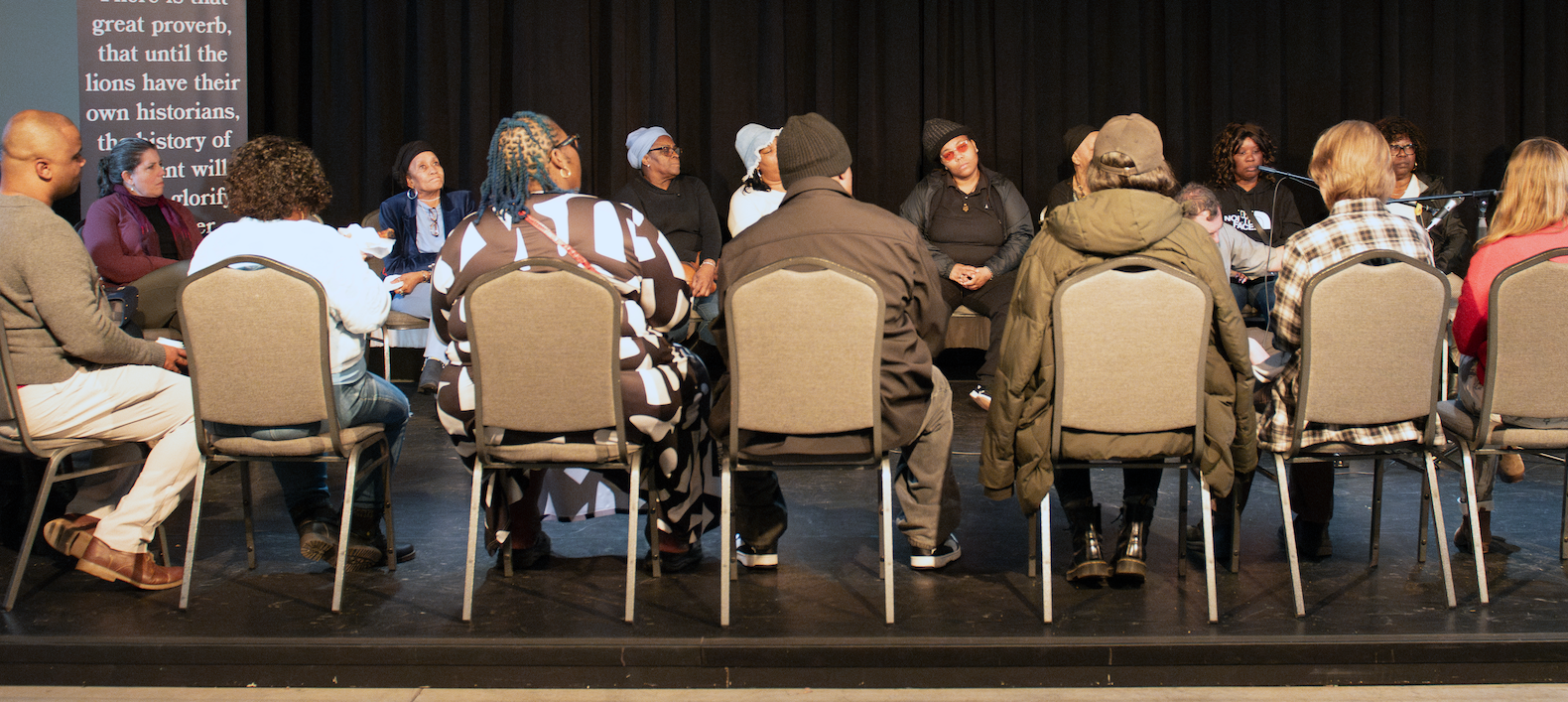
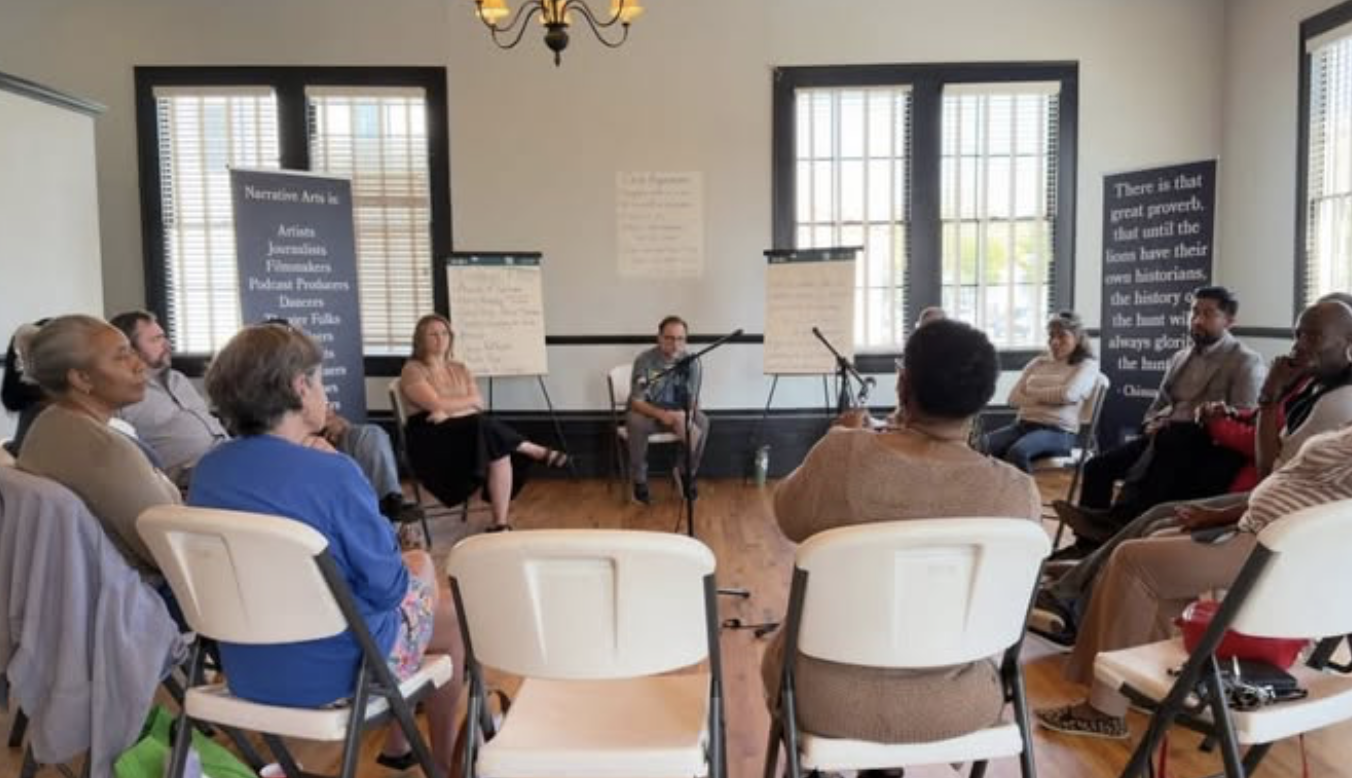
A story circle usually begins with a prompt and a shared set of agreements. Participants are invited to respond with a story from lived experience. Each person speaks in turn. Others listen without interruption.
The facilitator’s role is to hold the form, protect the space, and keep the group grounded in story. The facilitator is not there to dominate the conversation or steer it toward a predetermined conclusion. The structure matters because it creates trust, rhythm, and attention.
What emerges is often more than a series of individual stories. As people listen together, they begin to hear how personal experience connects to larger conditions such as housing, food, transportation, work, caregiving, geography, race, institutions, memory, and history.
How Narrative Arts uses story circles
Narrative Arts uses story circles as organizers, artists, and community media makers. For us, the circle is not an end point. It is a place where lived experience becomes shared knowledge and where shared knowledge can begin to take public form.
We use story circles to help communities speak from where they stand, listen across difference, and make meaning together. In our practice, the stories shared in a circle do not remain confined to the room. They are carried forward into journalism, documentary work, podcasts, facilitated dialogue, public gatherings, and creative strategy. They are reflected back in forms that allow people to hear their own realities in a larger frame.
What makes Narrative Arts’ use of story circles distinctive is that we do not treat them as a standalone engagement exercise. We use them as part of a larger process of public listening and public return. Stories are spoken in community, heard in relationship, interpreted with care, and returned to public life through media, art, and dialogue.
Our lineage and practice
Narrative Arts comes to story circles through practice, relationship, and time.
Our approach is rooted in direct learning with John O’Neal of Junebug Theater and in more than 30 years of using the form in community, cultural, and civic settings.
We carry this practice forward through our own experience as artists, facilitators, journalists, and cultural workers. In rural communities, coastal communities, public health settings, intergenerational gatherings, journalism projects, arts processes, and civic spaces, we have seen again and again that story circles can help people name what they know, hear what connects them, and better understand the world they are living in together.
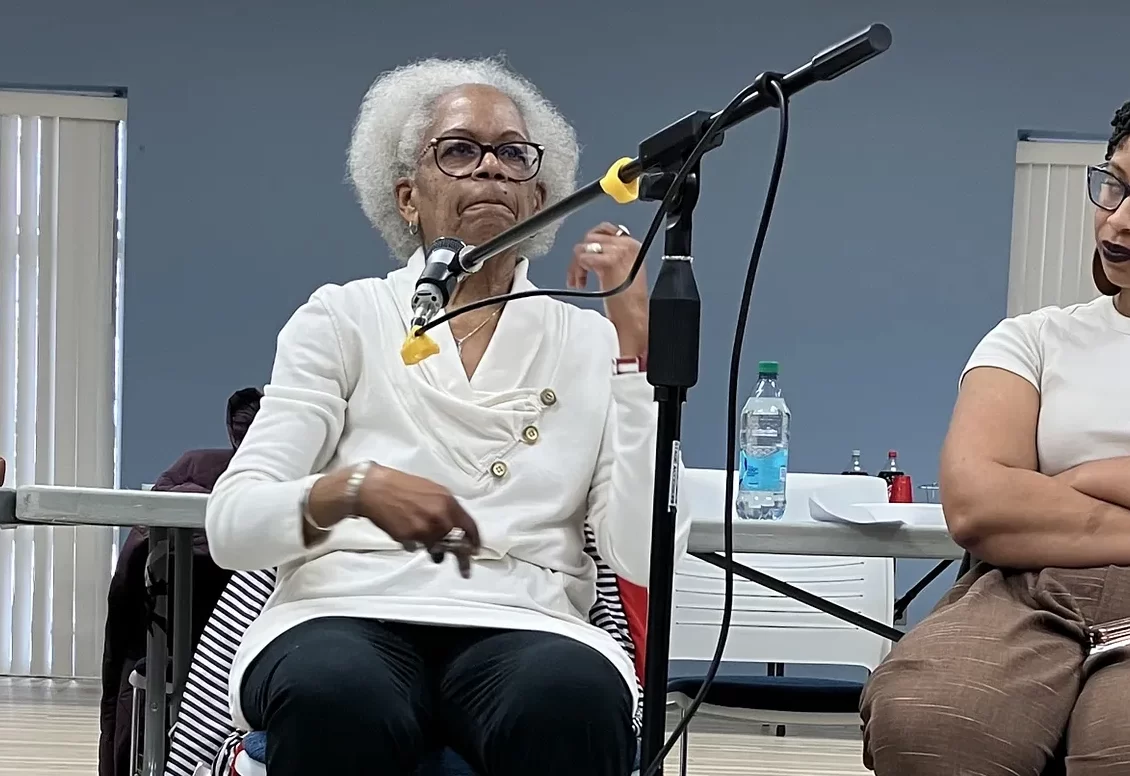
What a story circle is not
A story circle is not a debate.
It is not a panel discussion.
It is not a focus group disguised as community engagement.
It is not extractive interviewing.
And it is not the same thing as the screenwriting “story circle” used to describe fictional narrative structure.
A community story circle is a shared, facilitated practice of telling and listening. Its value comes from presence, trust, sequence, and the collective recognition that grows as stories are heard together.
Story circles in practice
At Narrative Arts, story circles are part of how community knowledge takes form.
For more than 30 years, we have used story circles in rural and coastal communities, in public health settings, in intergenerational gatherings, in journalism projects, and in cultural spaces where people needed a way to speak from lived experience and be heard with care. We have used them in coastal North Carolina, in spaces where residents, artists, organizers, and public-facing leaders could listen across difference and begin to recognize what their stories revealed together. We have used them in public health contexts, where the circle helped widen the conversation beyond individual behavior and toward the conditions shaping people’s lives. We have used them in intergenerational settings, where younger and older participants could speak across memory, age, and experience. And we have used them in journalism, podcast, and documentary processes, where story circles helped keep reporting and storytelling close to the ground.
Each circle is different, but the form allows something essential to happen. People speak in their own language. They hear one another across experience and difference. And over time, the room begins to recognize patterns that no single story could reveal on its own.
For Narrative Arts, the circle is both a gathering form and a public method: a way of helping lived experience become shared understanding.
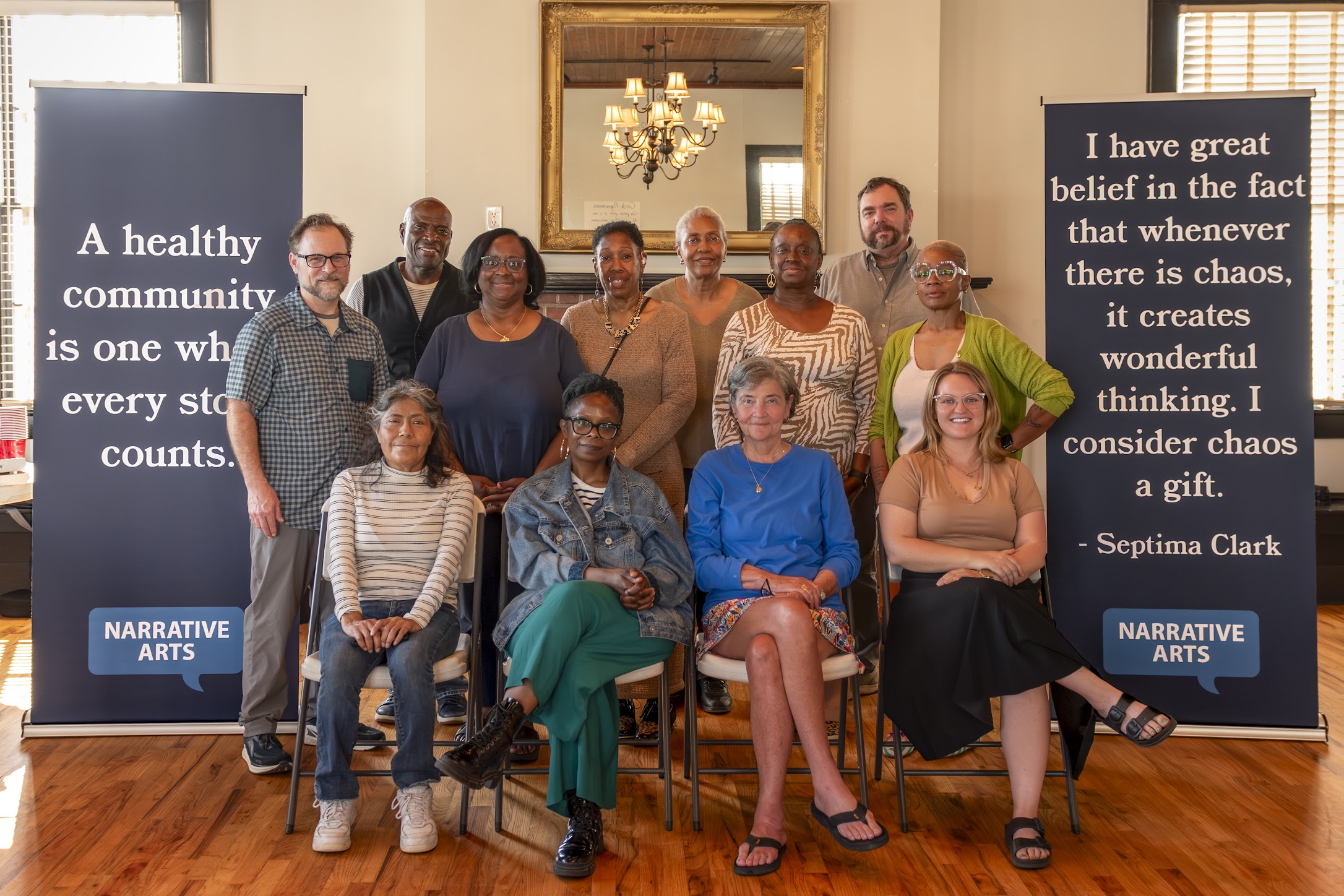
Why Narrative Arts
Narrative Arts is a longtime practitioner of story circles, with roots in direct learning with John O’Neal of Junebug Theater and more than three decades of experience using story circles in community, cultural, and civic life.
We bring both history and practice to this work. We know how to hold story circles with care. We know how to listen for what matters. And we know how to help stories move beyond the room and into forms that serve community understanding.
For us, story circles are one of the core ways communities make meaning, share truth, and build the narrative ground needed for change.
Frequently asked questions about story circles
What is a story circle?
A story circle is a facilitated group process in which people respond to a shared prompt by telling stories from lived experience and listening to one another in turn.
What is the purpose of a story circle?
The purpose of a story circle is to create the conditions for deep listening, reflection, recognition, and shared understanding.
How are story circles used?
Story circles are used in community storytelling, public health, cultural work, education, journalism, civic dialogue, and creative practice.
How long has Narrative Arts used story circles?
Narrative Arts has used story circles for more than 30 years.
Where did Narrative Arts learn this practice?
Our approach was shaped through direct learning with John O’Neal of Junebug Theater and through decades of applied community practice.