Stories of Change / Skoll Foundation and Sundance Institute
Stories of Change is a case study in how documentary storytelling can support social change when filmmakers, funders, and engagement strategists work together from the start. In this partnership between the Skoll Foundation and the Sundance Institute, films about social entrepreneurs were paired with audience engagement strategies designed to move viewers from awareness to action.
Project summary: A partnership between the Skoll Foundation and the Sundance Institute that supported documentary films about social entrepreneurs and the global challenges they address.
Narrative challenge: Creating practical ways to move viewers through a “funnel” of engagement, helping audiences go from awareness to deeper involvement with the issues raised by a film.
Evaluation metrics: Film quality, audience reach and demographics, cost per viewer, and specific outcomes related to the issue each film addressed.
Related links:
Sundance Institute: Stories of Change
Skoll: A Decade of Stories of Change
Narrative Arts Story Guide
“We talk about investing in, connecting and celebrating social entrepreneurs, in order to have a large-scale impact on the world’s most pressing problems,” said Sandy Herz, then the Skoll Foundation’s director of strategic alliances. For Skoll, celebrating was not about glorifying individuals. It was about using storytelling to engage people in larger narratives about the kind of world we could and should be building.
That made the Sundance Institute a natural partner. Stories of Change supported documentary projects inspired by the work of social entrepreneurs, connected filmmakers and social innovators, and built a network around storytelling and impact.
“Most people need to see before they can believe, and nothing makes social change more real than a good story well told.”
— Sandy Herz
Story and impact had to be designed together
The Skoll Foundation had already been exploring storytelling across multiple platforms, including books, television, radio, short films, and journalism partnerships. But one of the key lessons that emerged was that visibility alone was not enough. A strong film still needed an engagement strategy if it was going to move people from interest to action.
That insight led to the idea of an engagement “funnel.” In the case of The New Heroes, the challenge was not just getting people to watch a PBS program. The challenge was how to move them from viewing, to participating in community screenings or house parties, to taking a more concrete action such as giving, organizing, or otherwise supporting the work highlighted in the film.
Skoll’s experience showed that it was difficult to create a smooth progression from one stage to the next unless those steps were planned intentionally. That became one of the initiative’s central strategic lessons: storytelling works best when the path from awareness to engagement is designed in advance.
Audience engagement had to begin early
In the Stories of Change partnership, the point was not simply to make issue documentaries and hope they found their audience. Engagement planning needed to begin early in the filmmaking process, so that the story itself and the impact strategy could develop together.
Cara Mertes, then director of Sundance Institute’s Documentary Film Program and Fund, argued that foundations were right to ask hard questions before funding media work. But she also emphasized that audience engagement grants could be made during production, not only after a film was finished. That approach helped ensure that outreach, partnerships, and intended outcomes were considered from the start rather than treated as an afterthought.
Why this case study still matters
This case study still feels current because it speaks directly to one of the biggest questions in storytelling for social change: what helps a powerful story lead to meaningful public engagement? The Stories of Change partnership offers one answer. Build the story well, know your audience, and create clear ways for people to move from inspiration to action.
That principle remains central to Narrative Arts’ work today. Whether the form is documentary, journalism, performance, radio, or community storytelling, the goal is not just to reach people emotionally. It is to help stories open up participation, deepen commitment, and support change.
For more on our current approach, visit the Storytelling and Social Change Strategy Guide and explore more at Narrative Arts.

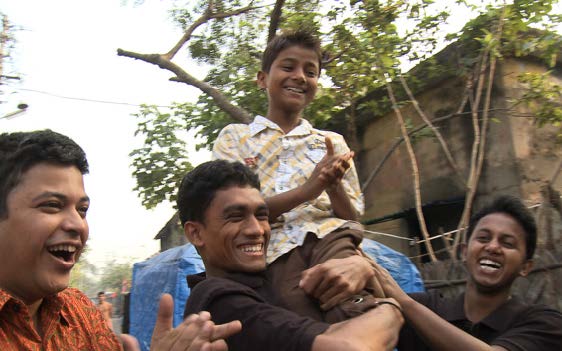
Watch: The Revolutionary Optimists, one of the films associated with Stories of Change, follows young people in Kolkata working to improve conditions in their communities.