Cornerstone Theater / Ford Foundation
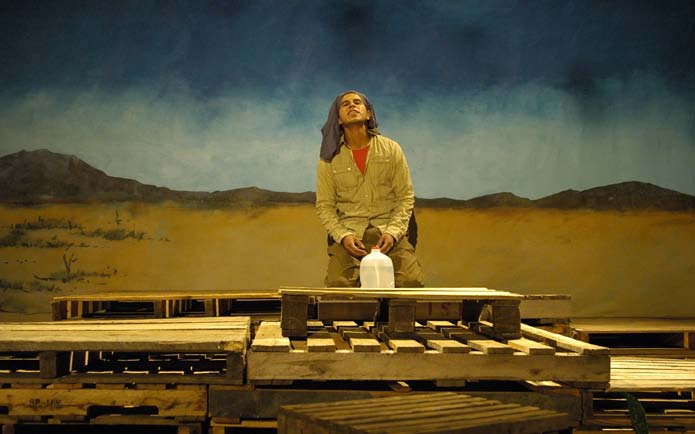
Cornerstone Theater Company is a leading example of community-based theater in Los Angeles. Through site-specific performance, public collaboration, and story circles, Cornerstone creates socially engaged theater with communities rather than simply about them. Its work shows how performance can open space for storytelling, participation, and dialogue across lines of difference.
Project summary: Cornerstone Theater Company is a socially engaged theater company that involves Los Angeles residents and visitors as sources of dramatic material, actors, audiences, and participants in dialogue. Its productions are rooted in community stories, local relationships, and public questions.Narrative challenge: Making thoughtful choices about what stories are included, what perspectives are held in tension, and how characters, communities, and conflicts are represented on stage.
Evaluation metrics: The number and diversity of people engaged, qualitative feedback throughout the life of a project, and longer-term signs of impact, including reunions, continuing partnerships, and community activity that grows out of the theater-making process.
Related links:
Cornerstone Theater Company
What Is a Story Circle?
Narrative Arts Story Guide
Los Illegals, a bilingual Spanish-English play by Cornerstone artistic director Michael John Garcés, grows out of tensions surrounding a day laborer site in Los Angeles. The events in the play are fictionalized, but they are rooted in real community experience. Like much of Cornerstone’s work, the production is site specific and developed in close collaboration with the people and issues it portrays.
That process is central to Cornerstone’s model. Community members are not just audiences. They are collaborators from the beginning. Story circles, interviews, public readings, community casting, and audience dialogue all help shape the work. The result is theater that draws dramatic power from lived experience while remaining fully committed to artistic craft.
“The stories we tell ourselves are how we live in the world. It’s incorrect to separate the stories we tell from how we act politically.”
— Michael John Garcés
Community-based theater in Los Angeles
Cornerstone’s work is a strong example of community-based theater because it begins with relationship, place, and participation. In Los Angeles, the company creates performances that are shaped by the neighborhoods, communities, and public issues around them. The stage is not separate from civic life. It becomes one way a city sees itself, argues with itself, and imagines itself differently.
That makes Cornerstone especially relevant to conversations about socially engaged theater, participatory art, and cultural organizing. Its productions do not treat community engagement as an add-on. Community process is part of the artistic method itself.
Story circles and play development
At Cornerstone, story circles are not a side activity. They are a core part of how plays are developed. When artists create the right context, people are often ready to talk about their lives, their neighborhoods, and the conflicts that shape their communities. Those stories help generate material, deepen understanding, and widen the range of voices that inform a production.
Cornerstone also uses this process to hold multiple perspectives in the room. That matters because socially engaged theater is not strongest when it simplifies a public issue. It is strongest when it allows complexity, disagreement, and contradiction to appear on stage in ways that people can recognize.
For Narrative Arts, this is one reason story circles remain such an important practice. They help create storytelling that is relational, democratic, and grounded in listening.
Public dialogue through performance
Cornerstone extends the conversation beyond the script and the stage. Readings of works in progress invite feedback from the community. Performances often include discussion of the public issues raised by the play. Casting regularly includes community members alongside experienced artists. The theater-making process becomes a form of audience development, civic dialogue, and shared inquiry.
This is one reason Cornerstone matters beyond the arts sector. It offers a model for how storytelling, performance, and dialogue can work together. The company shows how theater can become part of public life in a direct way, not by reducing art to a policy message, but by making art a meaningful place for encounter.
Socially engaged theater and artistic quality
Cornerstone rejects the false choice between social purpose and artistic excellence. The work asks the same artistic questions any strong theater should ask: Is it good? Is it compelling? Does it move people? Does it open something emotionally, politically, or aesthetically? Community-based theater does not have to be less rigorous in order to be more inclusive. Cornerstone demonstrates that socially engaged theater can be ambitious, disciplined, and alive.
That is one reason the company continues to be such a valuable example for artists, funders, educators, and organizers interested in storytelling for social change. It shows how process, participation, and performance can reinforce one another rather than compete.
Cornerstone Theater and Narrative Arts
Cornerstone’s approach aligns closely with Narrative Arts’ interest in stories as a living part of community life. Story is not just content. It is a way people understand conflict, identity, belonging, and possibility. In Cornerstone’s work, storytelling lives in rehearsal rooms, on sidewalks, in parking lots, in neighborhood conversations, and in the shared act of making performance together.
That makes this page useful not only as a theater case study, but also as an example of how stories move through community process, public art, and civic dialogue. For more on our own approach, visit the Storytelling and Social Change Strategy Guide and our page on what a story circle is.

Watch: this short video profile of community actor Renee Guntner, who appeared in Cornerstone’s play SEED, part of the company’s cycle of plays on hunger and food.