Blog
What Rural North Carolina Stories Tell Us About Trust, Access, and the Future of Public Health
How shared stories in Burgaw and Ahoskie point toward a more trusted public health future
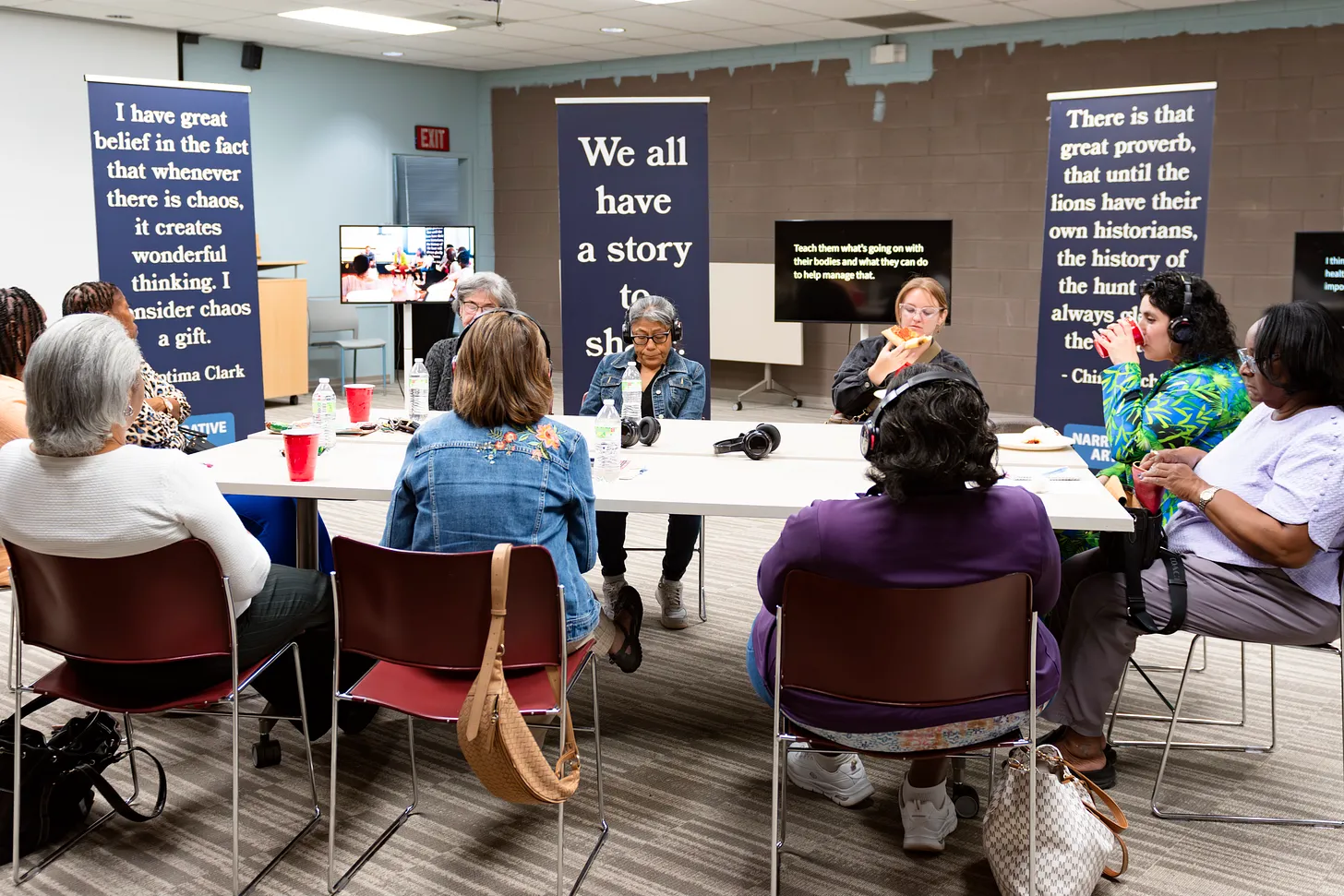
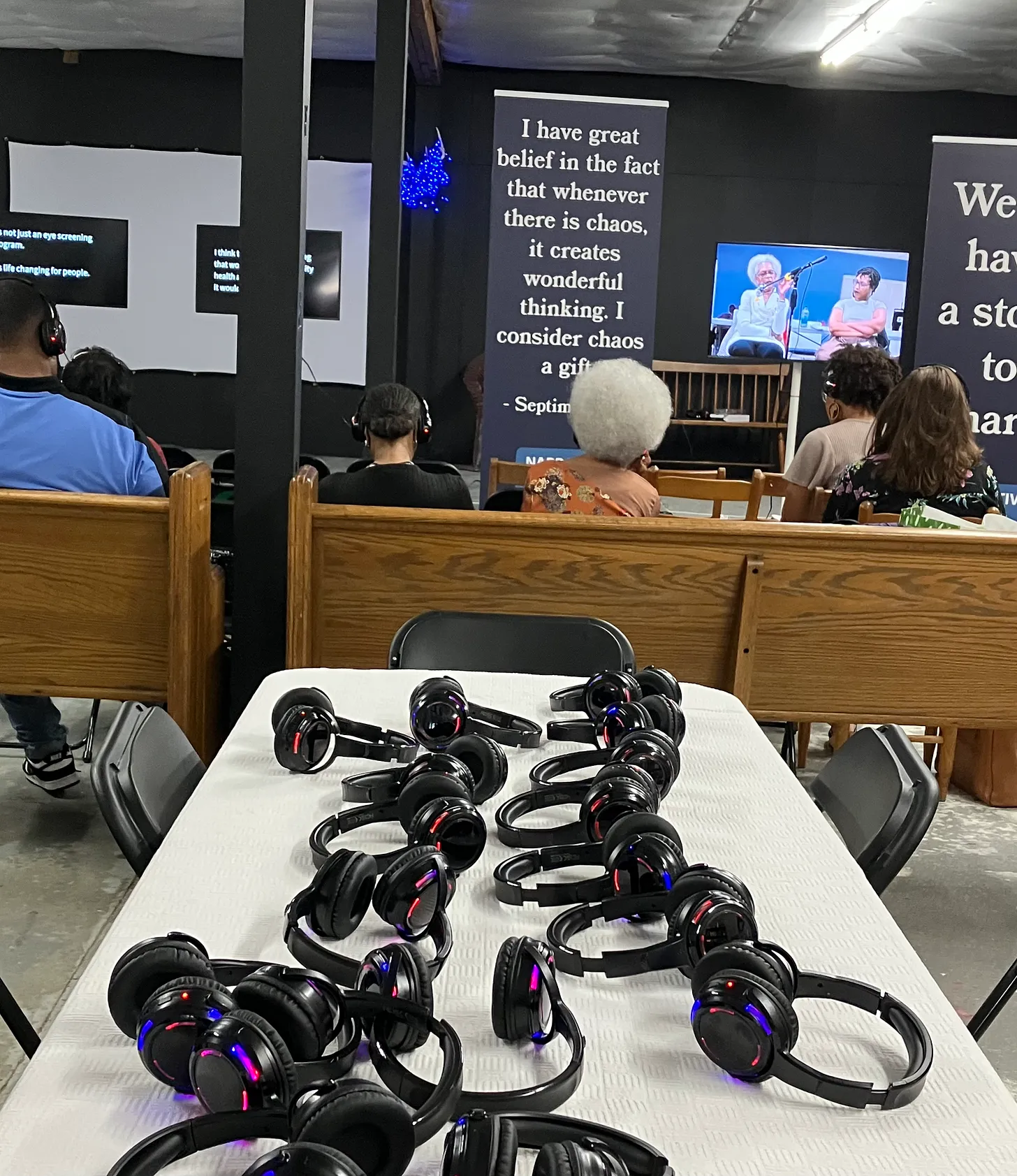
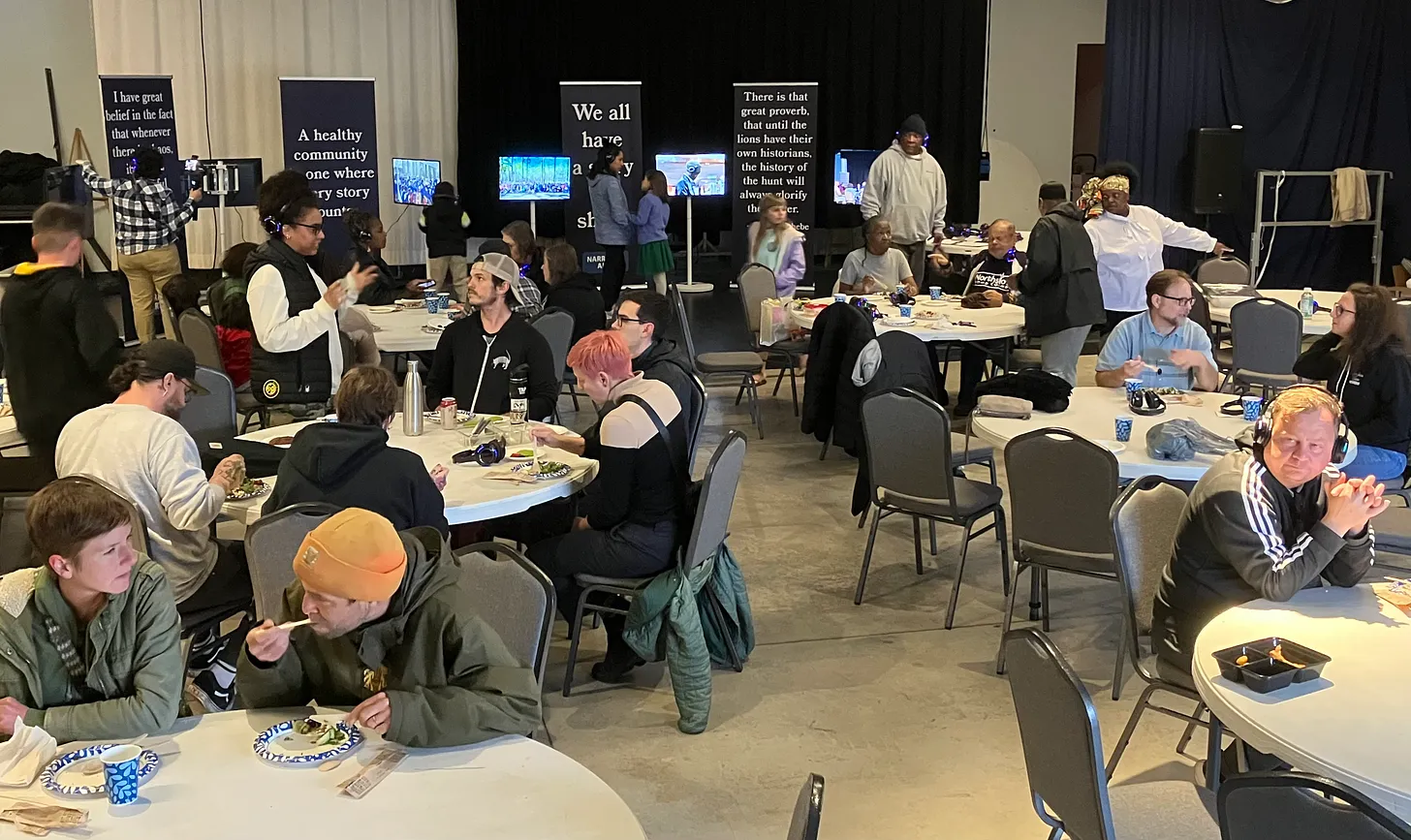
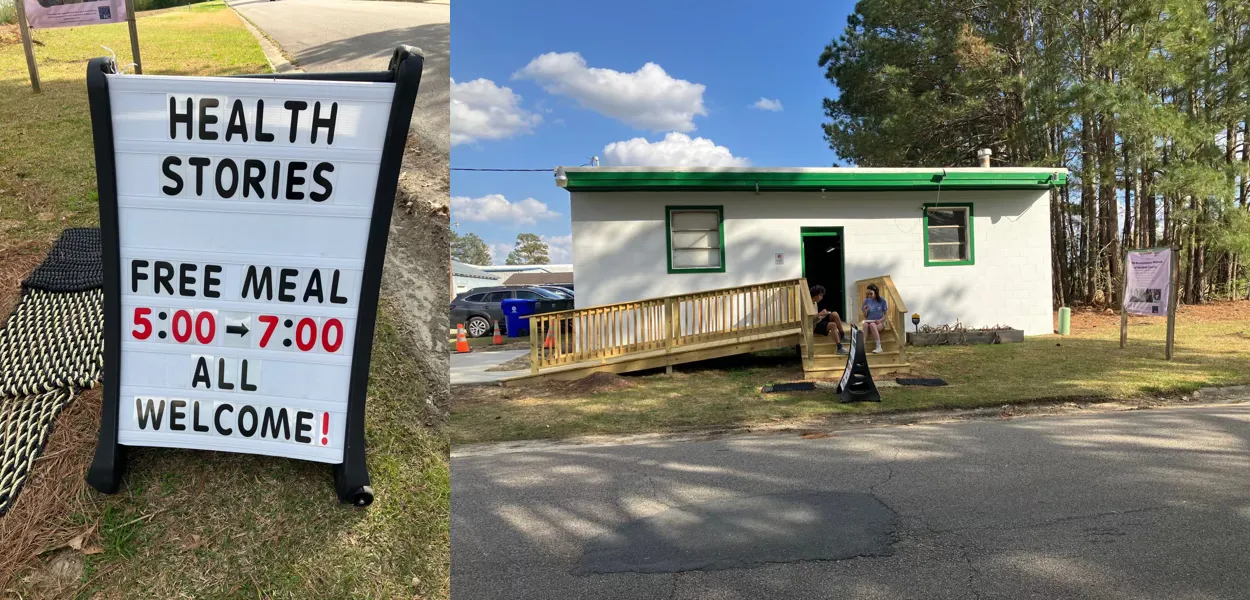
Narrative Arts recently returned to Burgaw and Ahoskie, North Carolina to share what we had heard through earlier story circles in those communities. In Burgaw, we gathered at the public library. In Ahoskie, we came together at the Cultivator in Hertford County. Using a wireless headphone and media installation, we invited people to listen to community stories, reflect together, and respond to what surfaced about governmental public health.
This kind of collective listening helps turn isolated experiences into shared public understanding, which is essential for narrative change and systems change alike.
By governmental public health, we mean the public-facing systems—like health departments, EMS, and services such as well-water testing—that help communities prevent harm, respond to crises, and create the conditions for health and well-being.
What people shared did not always separate governmental public health from healthcare, and that blurring is part of the story. In rural communities, public health is often experienced through the systems that actually show up: vaccine clinics, EMS, local health departments, community clinics, and providers who help people navigate care. What we heard was not only about treatment. It was about trust, access, coordination, and whether public systems feel present, visible, and worthy of reliance.
One story in Ahoskie began with a familiar perception: when someone gets sick, the first instinct is to leave town because “it’s not gonna work around here.” But that story moved in another direction. After being diagnosed with stage four breast cancer, the speaker described how the local community health center quickly connected them to care, referred them to a second opinion, and got them local treatment. Her reflection was simple: there are good providers here, and she hopes “some of that trust will get back into this area.”
A common theme across the story circles was that trust in governmental public health is built through experience. It grows when systems are responsive, coordinated, and worthy of reliance. Messaging alone is insufficient for building trust.
Other stories showed how public health operates in everyday life. An EMS worker described an aging population that often delays calling for help, not because services are unavailable, but because people do not want to be a burden. Others spoke about the stigma of seeking care in a rural place where everybody sees everything, especially when it comes to mental health or reproductive health. A community health worker described literacy barriers, transportation gaps, medication costs, and the importance of being a trusted resource who can help people navigate systems that often feel out of reach.
Again and again, what surfaced was not a lack of care or concern. It was a set of conditions that shape whether care is used, trusted, or avoided.
There were also moments that revealed what governmental public health can look like when it is visible, collective, and trusted. One public health worker described arriving at a COVID vaccination clinic worried that no one would come, only to see cars lined up down the road and people streaming in all day. “I’m not used to being thanked for our work,” she said, “but people were thanking us for being there.” In that moment, public health was not distant or invisible. It was shared, recognized, and collective.
The stories also made clear that public health is not only about services. It is about the conditions people live inside. Participants spoke about young people growing up in environments shaped by disruption, violence, and isolation, some becoming, in one participant’s words, “unfortunately unfazed” by death. They spoke about grief, about the need for safe spaces to process experience, and about the role of trusted relationships in helping people make sense of what they are living through
Taken together, these voices point toward something larger than any single program or institution. They help name a third-horizon vision of governmental public health in rural North Carolina: a system that moves upstream, addresses the conditions that shape health, and earns trust by being visible, coordinated, and accountable to the people it is meant to serve. In that vision, public health is not only about responding after harm. It is about building the social, civic, and institutional conditions that allow communities to thrive.
Not a system that operates at a distance, but one that is visible and present in community life.
Not a system defined only by services, but by relationships, trust, and coordination.
Not a system that speaks to communities, but one shaped with them.
In this vision, public health is not only something delivered. It is something built through shared narrative, lived experience, and collective responsibility.
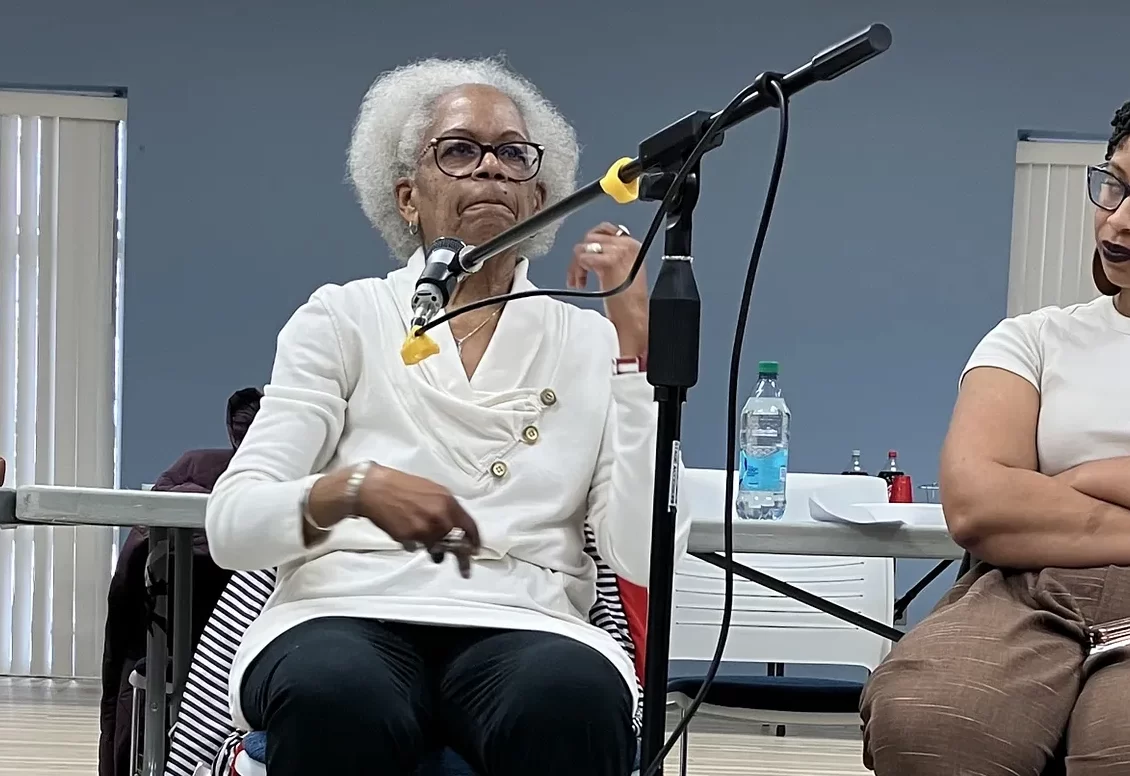
At our event in Burgaw, the conversation moved toward building collective power. Participants moved quickly to a harder question: if these challenges have been visible for decades, what is going to change, and when will action occur? That urgency matters. It points to a hunger not only for dialogue, but for accountability, alignment, and next steps. We talked about the role Narrative Arts can play in helping communities build a shared narrative about what governmental public health should be, one that can strengthen public understanding, increase civic alignment, and build momentum for more responsive policy, practice, and investment. We also recognized something just as important: the room itself held real community power. The people present represented relationships, knowledge, and leadership that already exist and can help move this work from story to action.
These gatherings are part of a larger multi-year, community-driven Narrative Arts initiative across rural North Carolina. Through story circles, interviews, and collaborative media-making, we are working with communities to explore how trust in governmental public health is built, lost, or repaired. Also, we are learning how community voices can help shape the narratives that influence policy, practice, and investment.
We are deeply grateful to everyone who joined us in Burgaw and Ahoskie, and especially to our community connectors Day Camposeco, LaCretia Munn, Cat Parker, and Weyling White for helping bring these gatherings to life.
Social Media


